
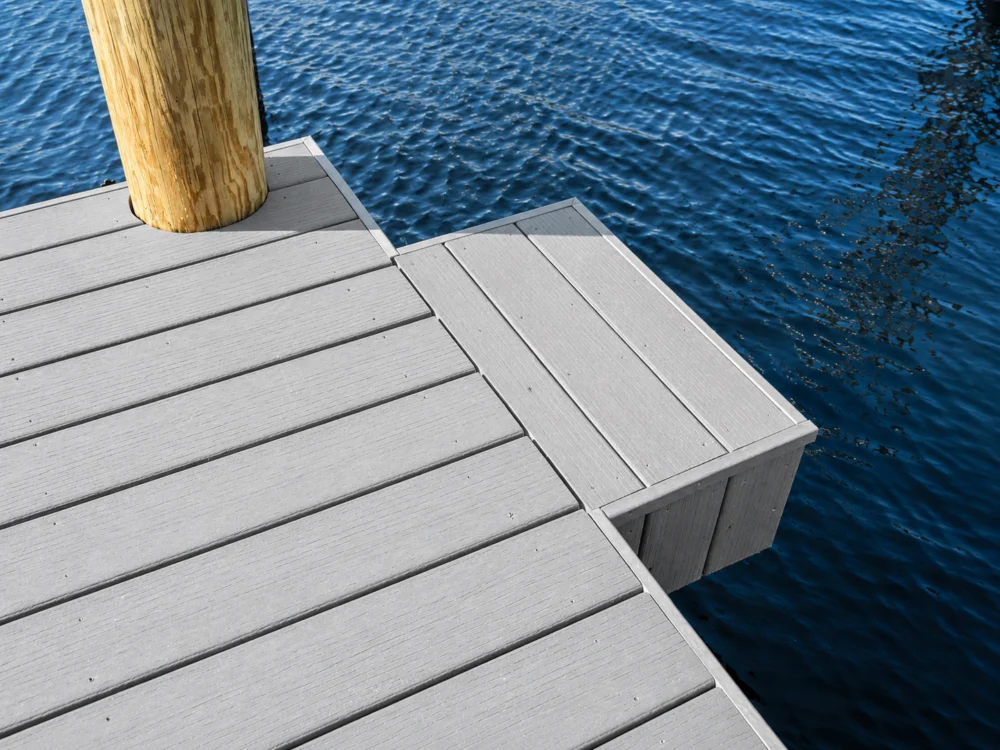
NO ROT / NO WOOD FIBER
Non-Rotting Deck Boards Start With Zero Wood Fiber
Rot does not happen at random. It requires moisture and organic material to take hold.
Lumberock® removes that vulnerability by eliminating wood fiber and organic fillers from the board entirely. Made from high-density polyethylene and inorganic mineral fillers, Lumberock provides a waterproof composite lumber option without the wood-based ingredients that can absorb moisture, swell, soften, decay, or rot over time.
Many homeowners searching for non-rotting deck boards are really looking for more than a surface coating or protective cap. They want a decking material that removes wood fiber from the equation altogether.
That is the Lumberock difference: a solid, non-organic board designed for long-term exposure to rain, humidity, shade, standing water, and everyday outdoor use.
THE PROBLEM
Many composite boards still carry wood’s vulnerabilities inside.
The performance of a deck board starts with what it is made from. Wood absorbs moisture, and many conventional wood-plastic composites still contain wood fiber within the board. When that organic material is repeatedly exposed to moisture, it may contribute to swelling, softening, splitting, decay, and other forms of deterioration over time.
Lumberock® takes wood fiber out of the equation entirely. Its HDPE-and-mineral composition contains no wood fiber and no organic filler, eliminating the wood-based pathway that can allow rot to begin inside the board.
No moisture-sensitive wood core. No hidden organic material. No wood-based pathway to rot.
The no-rot difference starts with what is not inside the board.
No rot and no wood fiber are not separate claims. They are directly connected. Rot depends on moisture and organic material. Traditional wood contains both a moisture-sensitive structure and organic content. Many composite deck boards also contain wood flour, cellulose, or other organic fillers within the board. Lumberock® does not.
Instead, Lumberock is made from high-density polyethylene and inorganic mineral fillers. By removing wood fiber and organic filler from the formulation, Lumberock eliminates the wood-based pathway that can lead to moisture absorption, swelling, softening, decay, and rot.
- Zero wood fiber: Lumberock contains no wood flour, cellulose, or wood-based filler inside the board.
- Zero organic filler: The board is made from HDPE and inorganic mineral fillers, removing the organic material rot depends on.
- No wood-based moisture pathway: Because there is no wood inside the board, moisture has no wood fiber to saturate, swell, or soften.
- Waterproof material story: Lumberock’s composition supports wet, humid, waterfront, porch, backyard, and agricultural environments.
- Built through the board: The performance is not a surface coating or cap. It starts with the material formula itself.
- Collection-wide differentiator: This no-wood-fiber story supports every Lumberock collection and application path.
Lumberock’s no-wood-fiber performance starts at the material level.
WHY IT MATTERS
The material inside the board determines what happens when water shows up.
A deck board should not hide its weakness inside the core. When a material contains wood fiber, the board still carries part of wood’s maintenance and moisture story with it. That matters for docks, porches, backyard decks, barns, marinas, and any project exposed to rain, humidity, shade, water, or repeated cleaning. Lumberock gives the project a cleaner material foundation: no wood, no organic filler, and no rot pathway inside the board. Homeowners searching for rot proof wood or rot resistant wood are really looking for exactly that: a material that removes the risk at the source rather than treating it after the fact.
Wood fiber is the failure point hiding inside many composite boards.
A product can be called composite and still carry wood’s biggest vulnerability inside the board. Wood fibers and organic fillers can absorb moisture over time, especially in shaded, wet, humid, or high-exposure environments. Once moisture reaches that organic content, the board may begin to swell, soften, stain, or break down. Lumberock avoids that problem by removing wood fiber from the formula entirely, giving the board a material foundation that is built for water instead of threatened by it.
- No wood flour, cellulose, or organic filler inside the board
- No wood-based pathway for swelling or softening
- Stronger material story than ordinary wood-plastic composite decking
- Supports wet, shaded, humid, coastal, and backyard environments
That makes Lumberock the rot board alternative contractors recommend when moisture is a certainty, not a risk. A single composite deck board with wood fiber inside can undo an otherwise solid build.
Rot does not start on the surface. It starts when moisture finds something to break down.
A rotting deck rarely happens overnight. It usually starts with a hidden material weakness no one can see. Paint, coatings, caps, and surface treatments can help a board look protected, but they do not change what is inside the material. Real wood deck protection doesn’t come from a coating. It comes from removing the wood fiber that causes the problem in the first place. If the core still depends on organic material, moisture can eventually find a weak point. Lumberock does not rely on a wood-filled core or a surface-only promise. Its HDPE and mineral-filled composition removes the organic material rot needs, helping the board resist the decay cycle that shortens the life of wood and many wood-composite products.
- No organic material for rot to feed on
- Performance is built into the board, not just applied to the surface
- Designed for repeated outdoor exposure
- A better fit for projects where moisture is part of the environment
A no-wood-fiber board is easier to trust in more places.
Not every composite deck holds up across this many different environments. The no-rot story matters far beyond a backyard deck. It matters on docks, porch boards, waterfront walkways, barn floors, horse stalls, marinas, and custom specialty projects where moisture, cleaning, humidity, or ground contact can expose weak materials quickly. Lumberock gives homeowners and contractors one consistent material advantage across those applications: a board with no wood fiber, no organic filler, and no wood-based rot pathway. Composite decking boards that still rely on wood fiber face the same risk in every one of these settings.
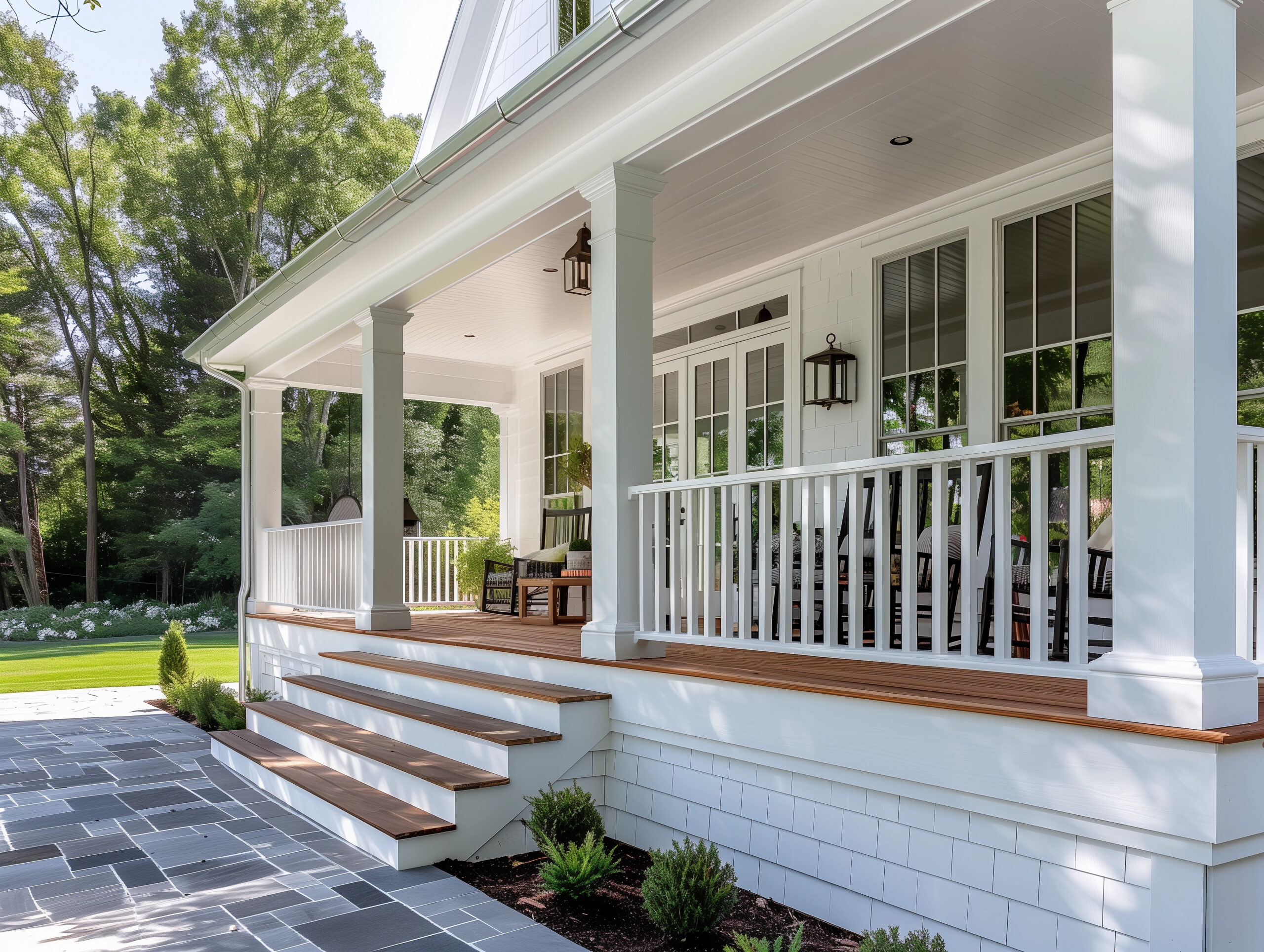
- Supports backyard, porch, dock, waterfront, agricultural, and specialty applications
- Useful in high-moisture and high-cleaning environments
- Reduces the material risk behind hidden rot and decay
- Gives every collection a consistent performance foundation
NO ROT BY THE NUMBERS
The numbers that matter
ZERO
Wood fiber inside the board
ZERO
Organic filler inside the board
20+
Years of Lumberock performance
HEAR IT FROM THE PROS
Why no wood fiber matters to people who build outside
Use this section for a contractor, dealer, or property owner who has seen wood or wood-filled composite fail and can explain why Lumberock’s no-wood-fiber material story matters in the field. The strongest proof will come from projects exposed to moisture, shade, water, animal use, or heavy cleaning.
No rot. No wood fiber. Real outdoor performance.
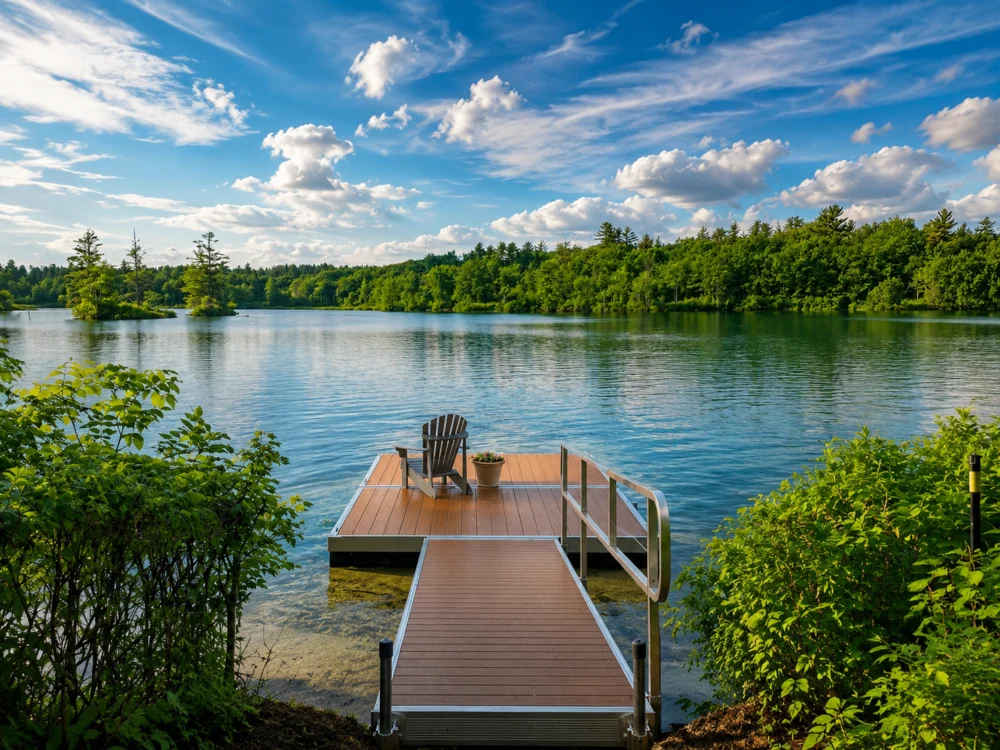
SHOP BY COLLECTION
Every Lumberock collection starts with the same no-wood-fiber advantage.


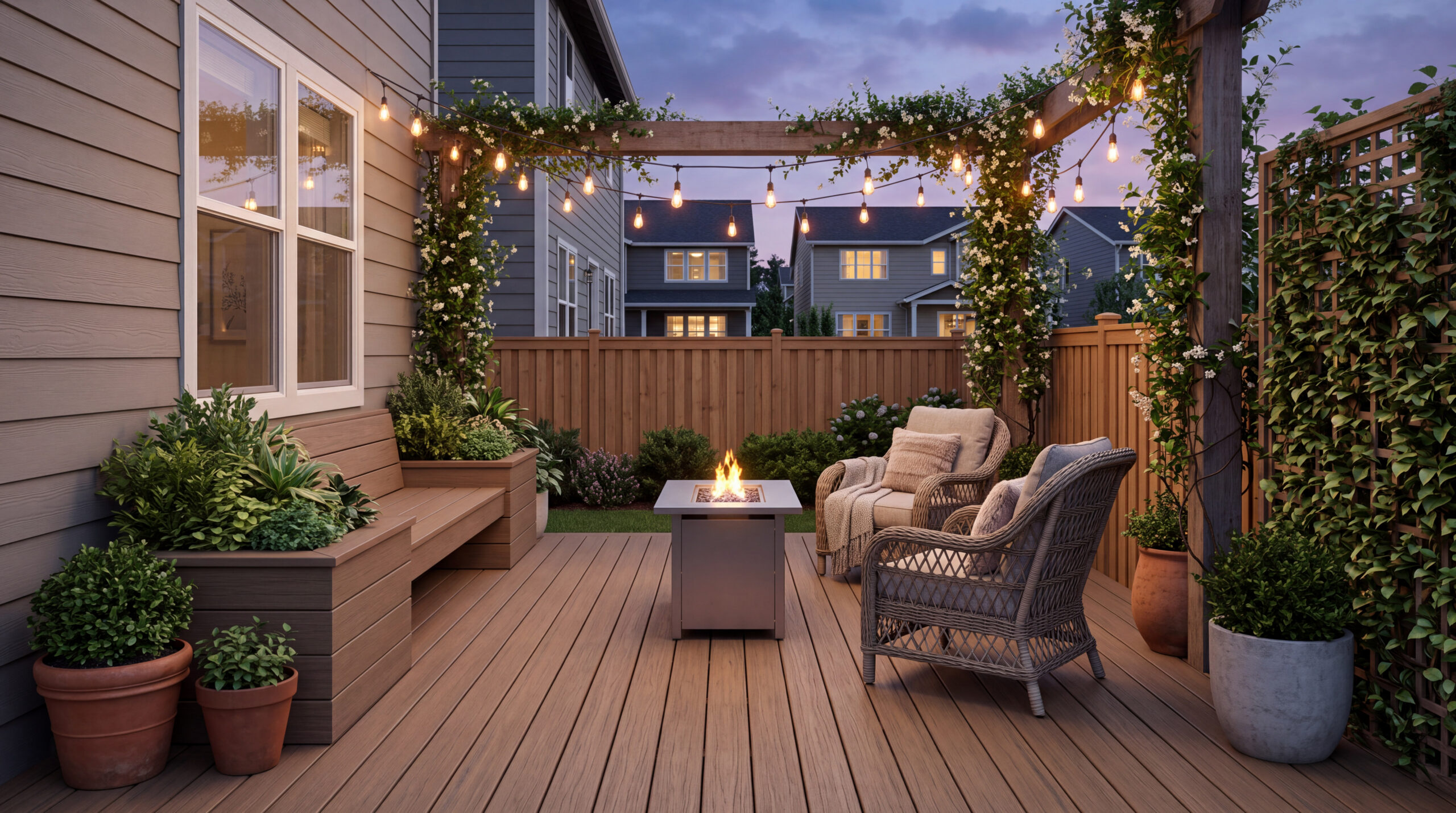
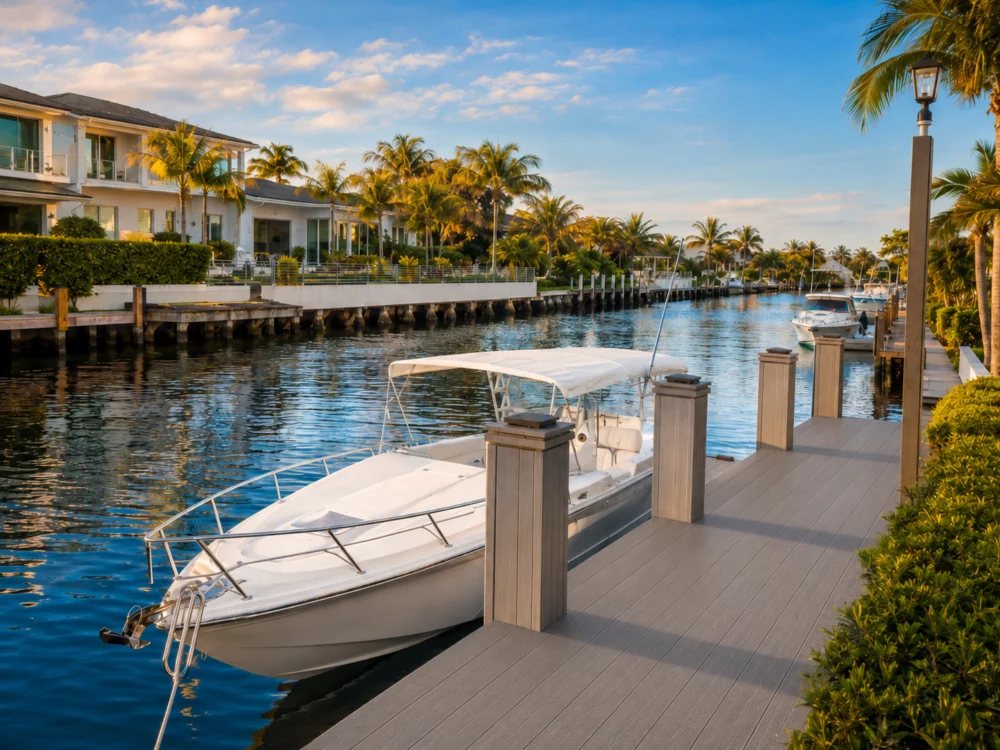
SHOP BY PERFORMANCE
24″ On-Center Span
Take the wood out and the other properties follow. Here is what else the same board is doing.
Marine-Grade Performance
Engineered for constant water contact — salt spray, freeze-thaw, and full submersion.
Low-Maintenance Decking
No sanding, no staining, no sealing. Soap and water is the whole routine.
Heavy-Duty Plastic Lumber
For the loads and traffic that chew through conventional decking.
Profile & Size Flexibility
A full range of profiles and lengths — a material system, not a single board.
24″ On-Center Span
A structural advantage that can simplify framing when the application supports it.
READY TO BUILD WITHOUT WOOD FIBER?
Start with the material difference you can feel.
Some call it synthetic lumber. Lumberock calls it the material standard. See the difference a no-wood-fiber board makes. Request free samples, compare Lumberock against ordinary wood-filled composite decking, and choose a material built to resist the moisture problems that cause so many outdoor boards to fail.